Insider tips for rubbish removal blocked access at Ripple Road
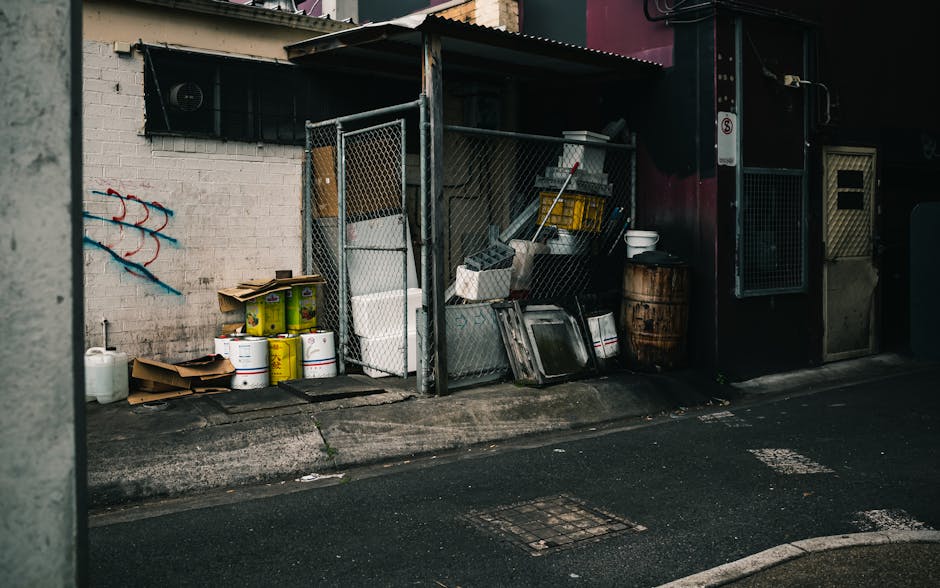
If you have rubbish removal blocked access at Ripple Road, you already know the awkward bit is rarely the waste itself. It is the gate that is too narrow, the parked cars, the tight alley, the heavy item that will not fit round the bend, or the shared entrance that seems to shrink by the day. Truth be told, a lot of collections go smoothly until access becomes the real obstacle.
This guide breaks the problem down in plain English. You will learn what blocked access actually means on the ground, how a good clearance team works around it, what to prepare before collection day, and which mistakes cause delays, extra lifting, or avoidable costs. We will also cover safety, best practice, and a few insider tips that make a noticeable difference when you are dealing with Ripple Road's busier streets and less forgiving access points.
To keep things practical, we will focus on the realities people face: terraces with rear lanes, flats with awkward stairwells, office buildings with loading restrictions, and homes where the rubbish is there, but the route out is the problem. Let's get into it.
Why blocked access matters
Blocked access changes the job in a few important ways. First, it affects time. A collection that would normally be a quick lift-and-load can turn into a careful carry, a split load, or a shuttle from the property to the vehicle. That means more planning and, sometimes, a different vehicle or a smaller team.
Second, it affects safety. When access is tight, every extra turn, step, kerb, or doorway becomes a risk point. A sofa may scrape a wall. A heavy bag may tear. A wet path can turn into a slip hazard. And if rubbish has been left near a busy pavement, you may have to think about pedestrians, neighbours, and passing traffic too.
Third, access affects the final cost and service expectation. Not always dramatically, but enough that an honest contractor will want to know about it in advance. If they are told the access is easy and then arrive to find a locked rear gate, a steep staircase, or no legal stopping space, the schedule can unravel. Nobody enjoys that phone call at 8:15 in the morning.
For local properties around Ripple Road, access challenges often come from the mix of residential and commercial buildings, busier roadside parking, and shared entry points. That does not make the job impossible. It just means the planning has to be smarter than usual.
Expert takeaway: the earlier you describe the access, the better the clearance plan will be. "Easy access" is not a detail; it is part of the job specification.
How the process works
When access is blocked or restricted, a proper rubbish removal service usually starts by assessing how the waste can be reached, moved, and loaded without causing damage or unnecessary delay. In practice, that assessment may happen over the phone, by photo, or on arrival if the job is straightforward enough to judge quickly.
The team will usually look at a few things:
- how far the rubbish is from the vehicle
- the width of doorways, gates, stairwells, and corridors
- whether there is room to park or stop safely
- if items need to be dismantled before moving
- whether there are fragile surfaces, narrow turns, or shared areas
From there, they may choose a smaller truck, bring extra labour, use sacks or cages for loose waste, or arrange a staged load. Sometimes the smartest move is not brute force, but simply reducing the size and shape of each item before collection. A wardrobe taken apart at the right moment is a lot easier to move than one stubborn lump trying to bend physics.
If you are booking a broader clearance, it can help to think beyond one pile of rubbish. Services such as house clearance, home clearance, or even flat clearance are often affected by access in the same way. The difference is that a specialist team will adapt the loading plan around the property rather than forcing the property to fit the plan.
That flexibility matters. A lot.
Key benefits and practical advantages
Getting the access issue right does more than avoid hassle. It makes the entire job cleaner, faster, and safer.
- Less disruption: fewer trips, fewer awkward manoeuvres, and less standing around while everyone works out how to move a bulky item through a tight gap.
- Lower damage risk: good planning reduces scuffed walls, chipped paint, broken handles, and scratched flooring.
- Better timekeeping: if the crew knows what to expect, they can arrive prepared with the right equipment and enough hands.
- Safer handling: proper lifting routes, shorter carry distances, and clearer access reduce strain and accidents.
- More accurate pricing: a realistic description of the site usually leads to a more reliable quote.
There is also a quieter benefit that people often overlook: less stress. If you have ever stood in a hallway at 7:30 in the morning while someone tries to angle a mattress around a bannister, you will know that reassurance matters. A calm plan beats a rushed one every time.
Where the waste includes mixed household items, broken furniture, garden debris, or renovation offcuts, blocked access can turn a simple collection into a much longer operation. In those cases, services like furniture disposal, garden clearance, or builders waste clearance are often easiest when the access issue is explained clearly from the start.
Who this is for and when it makes sense
This is relevant if you are a homeowner, landlord, tenant, business owner, or property manager facing a collection that is simple in volume but awkward in access. It is especially useful if you are dealing with one of these situations:
- a terraced property with rear access blocked by bins, fencing, or neighbouring boundaries
- a flat with a narrow stairwell or shared corridor
- a shop or office where loading has to happen outside restricted hours
- a garage or loft clearance where the route down is more difficult than the waste itself
- a house where parked cars make kerbside loading tricky
If the items are light and manageable, a basic collection may still be fine. But if the route is tight, steep, or shared, it makes sense to choose a team that can work methodically instead of rushing through the job. That is often the difference between a smooth clearance and a headache that drags on into the afternoon.
For business premises, the issue can be a little more formal. Waste may need to be removed without blocking customers, loading bays, or fire exits. If that sounds familiar, business waste removal and office clearance are the kinds of services where access planning should be taken seriously, not treated as a small side note.
Step-by-step guidance
Here is a practical way to handle rubbish removal when access is blocked or awkward at Ripple Road.
- Measure the route. Check gate widths, doorway clearances, corridor corners, and stair turns. You do not need engineering precision, but basic dimensions help.
- Identify the bottleneck. Is it parking, a locked gate, a flight of stairs, a narrow hallway, or a shared access issue? Knowing the main obstacle keeps the plan focused.
- Separate bulky items early. Break down what you can safely dismantle. Flat-pack pieces, bed frames, and shelving often move better in parts.
- Clear the route. Move shoes, plant pots, bikes, doormats, loose cables, and bins out of the way. Simple, but effective.
- Take photos. A few clear pictures of the access route and the rubbish pile help the team judge labour, vehicle size, and equipment needs.
- Confirm parking or stopping space. If the vehicle cannot park nearby, say so. This is one of the biggest reasons jobs take longer than expected.
- Ask what the crew will bring. For awkward access, it may be sensible to request extra labour, sack trucks, dollies, protective blankets, or a smaller vehicle.
- Agree the collection sequence. In some cases, the team should remove the easiest items first to clear space for heavier or more awkward ones.
- Keep neighbours informed if needed. A quick heads-up can prevent a blocked doorway or an unhappy shared-hallway conversation. Nobody wants that before lunch.
- Stay available during collection. A five-minute decision can save a thirty-minute delay if access changes on arrival.
If the waste is a mix of general clutter, old appliances, and worn-out household goods, a broader service such as waste removal may be the most practical route because the load can be planned around the access limitations rather than treated as a one-size-fits-all clearance.
Expert tips for better results
These are the sorts of small things that make a big difference.
- Use the back route if it is genuinely easier. Rear access can be brilliant, but only if it is actually available and unlocked. "Should be open" is not the same as open.
- Keep a clear landing zone. Even if the vehicle is far away, a neat staging point near the front door or gate helps the team work in a rhythm.
- Label anything fragile or reusable. If a few items can be donated, kept, or sold, mark them before the removal team arrives. It reduces mistakes.
- Avoid overfilling black bags. Heavy bags are harder to carry through tight spaces and are more likely to split at the worst possible moment.
- Think in loads, not just volume. A light but bulky pile can be more awkward than a smaller pile of dense waste.
In our experience, the best jobs are the ones where the customer thinks one step ahead of the team. That is not about doing the crew's job for them. It is about removing friction before it starts. You would be surprised how often ten minutes of prep saves half an hour on site.
A small but useful habit: stand where the waste will need to travel and look at the route from the carrier's point of view. Is there a tight corner? A swinging door? A wet patch? A neighbour's bike? You start noticing things when you walk the path slowly. It sounds obvious, but most people only realise after the first awkward lift.
If your clearance includes old sofas, wardrobes, tables, or mattresses, it may be worth checking whether furniture clearance is the cleanest option. Larger items are often the ones that expose access problems first.
Common mistakes to avoid
Some errors crop up again and again. A few are minor. Others can derail the whole job.
- Understating access problems. Saying it is "fine" when the route is actually tight or blocked creates avoidable tension on the day.
- Leaving the route full of obstacles. A few leftover boxes or a bike chain across the path can slow everything down.
- Forgetting parking restrictions. On busier roads, the vehicle may not be able to stop where you assume it will. That matters more than people think.
- Not preparing bulky waste. If something can be safely dismantled beforehand, do it. Or ask in advance whether dismantling support is available.
- Ignoring shared access rules. Flats and commercial buildings often have building rules that affect timing, loading, or noise.
- Assuming every clearance team has the same equipment. They do not. Some are better suited to awkward access than others.
One sneaky mistake is waiting until collection day to mention the gate is locked by a neighbour or the alley is blocked by a delivery van. If the team finds out then, they may still solve it, but you have already lost time and probably a bit of goodwill. Not ideal.
Tools, resources and recommendations
You do not need specialist machinery for most blocked-access clearances. What you do need is the right mix of simple tools and sensible prep.
| Tool or approach | Why it helps | Best used for |
|---|---|---|
| Measuring tape | Checks whether bulky items will fit through doors and corners | Wardrobes, beds, white goods, stairwells |
| Mobile phone camera | Helps explain access conditions clearly before the visit | All collections, especially awkward ones |
| Heavy-duty bags | Safer than thin sacks for mixed waste and sharp edges | General rubbish, light renovation debris |
| Trolley or sack truck | Makes long carries less tiring and more controlled | Flat routes, loading zones, office clearances |
| Protective covers | Reduces scratches and marks on walls or flooring | Narrow hallways, stairs, communal areas |
For people who want a more organised move-out or property reset, services such as garage clearance, loft clearance, and furniture disposal are often the most practical match because they deal with awkward items in a structured way.
If you are comparing providers, it is worth looking at their pricing and quotes, how they approach insurance and safety, and whether their broader standards align with your expectations. That is just common sense, really.
Law, compliance and best practice
When rubbish is removed from a property, the main concern is not just convenience. It is also safe handling, lawful disposal, and respect for shared spaces. UK waste management expectations can be quite straightforward in principle: waste should be handled responsibly, transferred appropriately, and disposed of through legitimate routes. The exact obligations can vary depending on the type of waste and the setting, so careful wording and sensible procedures matter.
For blocked access jobs, best practice usually includes:
- not blocking exits, entrances, or emergency access routes
- keeping walkways clear where possible
- using safe lifting methods and suitable team sizes
- protecting surfaces in tight or shared areas
- checking whether any items need special handling
If the waste includes sharp, heavy, awkward, or potentially contaminated items, a cautious approach is always better. No shortcut is worth an injury or a damaged stairwell. And in a place like Ripple Road, where foot traffic and parking pressure can be part of the daily picture, common-sense planning is not optional.
It is also wise to work with a company that is open about its policies. You may want to review its health and safety policy, understand how complaints are handled through the complaints procedure, and check whether its broader operating values are explained clearly in the about us page. Those details do not remove the access problem, of course, but they do show how the business thinks.
Options, methods, or comparison table
If you are deciding how to handle blocked access, it helps to compare the main approaches. There is no single perfect answer. It depends on what you are removing and how tight the route is.
| Method | Best for | Pros | Limitations |
|---|---|---|---|
| Standard kerbside collection | Simple waste with clear roadside access | Fast, straightforward, usually efficient | Not suitable if the vehicle cannot stop nearby |
| Carry from property to vehicle | Homes, flats, and offices with manageable routes | Flexible and widely used | Slower when the route is long or narrow |
| Staged load with extra labour | Bulky or mixed waste with awkward access | Safer for heavy items and tight spaces | Can take longer and may cost more |
| Pre-dismantled clearance | Furniture, shelving, beds, and flat-pack units | Reduces strain and improves fit through narrow routes | Needs advance preparation or on-site dismantling |
For most people, the question is not which method is best in theory. It is which one fits the property without turning the day into a puzzle. If access is constrained, the winner is usually the method that keeps the process simple and safe.
Case study or real-world example
Picture a typical Ripple Road scenario: a small first-floor flat above a shop, with a shared entrance, a narrow stairwell, and no direct parking right outside. The tenant has several bags of mixed household rubbish, an old desk, and a broken bookcase. Nothing massive. But the access is awkward enough to make the job feel bigger than it is.
The first useful step is to separate the desk and bookcase from the loose rubbish. The loose rubbish can be bagged and staged closer to the entrance. The bookcase is checked to see whether it can be dismantled into flat sections. Photos of the stairwell and front approach are shared before collection, so the team knows to bring protective coverings and enough labour for a careful carry.
On the day, the route is cleared of shoes and a couple of bicycle locks that were making the landing feel tighter than it really was. The crew uses a steady two-person carry for the larger pieces, then shifts the bags in a final run. No drama. No wall marks. No one standing around guessing what to do next.
That is the real lesson here. Blocked access does not have to be a disaster. It just needs honest planning and a little preparation. Most of the stress disappears once the route is understood.
Practical checklist
Use this before your collection day. It keeps things calm and avoids those last-minute scrambles.
- Confirm exactly where the rubbish is located
- Measure gates, doors, corridors, stair turns, and any tight corners
- Check whether parking or stopping space is available
- Take a few clear photos of the access route
- Remove obstacles from hallways, paths, and doorways
- Dismantle bulky furniture if it can be done safely
- Separate fragile, reusable, and general waste items
- Tell neighbours or building management if the collection affects shared access
- Ask whether extra labour or smaller vehicles may be needed
- Keep your phone close on the day in case the crew needs a quick decision
If you are booking a more involved property clearance, it can also help to think in terms of service type. For example, a full house clearance is not handled the same way as a focused garage clearance, and a compact flat clearance has very different access realities from a garden load. That sounds obvious when you say it out loud, but people often only spot it after the first visit.
Get a free quote today and see how much you can save.
Conclusion
Blocked access at Ripple Road is not really about rubbish alone. It is about route planning, timing, safety, and knowing where the awkward points are before anyone lifts a thing. If you get those pieces right, the job tends to run smoothly even when the property itself is a bit of a squeeze.
The best approach is simple: be accurate, be prepared, and do not hide the access challenge. A clear description saves time, reduces risk, and gives the collection team a chance to do the work properly. That is what most people want, after all. A tidy finish, no mess, no faff.
And if you are still unsure, that is perfectly normal. A quick conversation, a few photos, and a realistic plan can turn a tricky clearance into something manageable. Sometimes the smallest bit of preparation makes the whole day feel lighter.
There is usually a way through it. One careful step at a time.
Frequently Asked Questions
What does blocked access mean for rubbish removal at Ripple Road?
It means the crew cannot reach the waste easily by the normal route. That might be because of narrow doors, stairs, parked cars, locked gates, shared entrances, or restricted stopping space.
Can rubbish still be removed if the vehicle cannot park right outside?
Yes, often it can. The team may need to carry items further, use a different vehicle, or organise the load in stages. It usually just takes more planning.
How should I prepare if my access is tight?
Clear the route, measure the narrow points, take photos, and separate bulky items where possible. If anything looks borderline, mention it before the appointment rather than on the day.
Will blocked access make the job more expensive?
It can, depending on the extra labour, time, or equipment involved. The only reliable way to know is to describe the access accurately and ask for a clear quote.
Do I need to dismantle furniture before collection?
Not always, but it helps if the route is narrow or awkward. Beds, shelving, and wardrobes often move more easily in pieces.
What if the access route is through a shared hallway or communal area?
Then it is important to keep the route clear and avoid causing disruption to neighbours. In some buildings, you may also need to follow management rules about timing or loading.
Is it better to use a smaller vehicle for restricted access?
Sometimes, yes. A smaller vehicle can be easier to position on busier roads, especially where parking is tight. But the right choice depends on the amount and type of waste too.
What kind of rubbish is hardest to remove with blocked access?
Large furniture, broken appliances, heavy renovation debris, and mixed waste in flimsy bags are usually the most awkward. They are bulky, heavy, or both.
How much notice should I give about access problems?
As early as possible. Even a short heads-up can help the team plan labour, parking, and equipment properly. Last-minute surprises are what usually cause delays.
What should I ask a clearance company before booking?
Ask how they handle narrow access, whether they need photos, what happens if parking is restricted, and whether they carry the right insurance and safety procedures for awkward collections.
Can blocked access affect office or business waste removal too?
Absolutely. Offices, shops, and workspaces often have loading restrictions, customer traffic, and shared entrances, so access planning is just as important as the waste itself.
Where can I find more information about related clearance services?
If you are dealing with a larger or mixed load, it can help to compare waste removal, house clearance, and home clearance options to see which fits your property and access situation best.